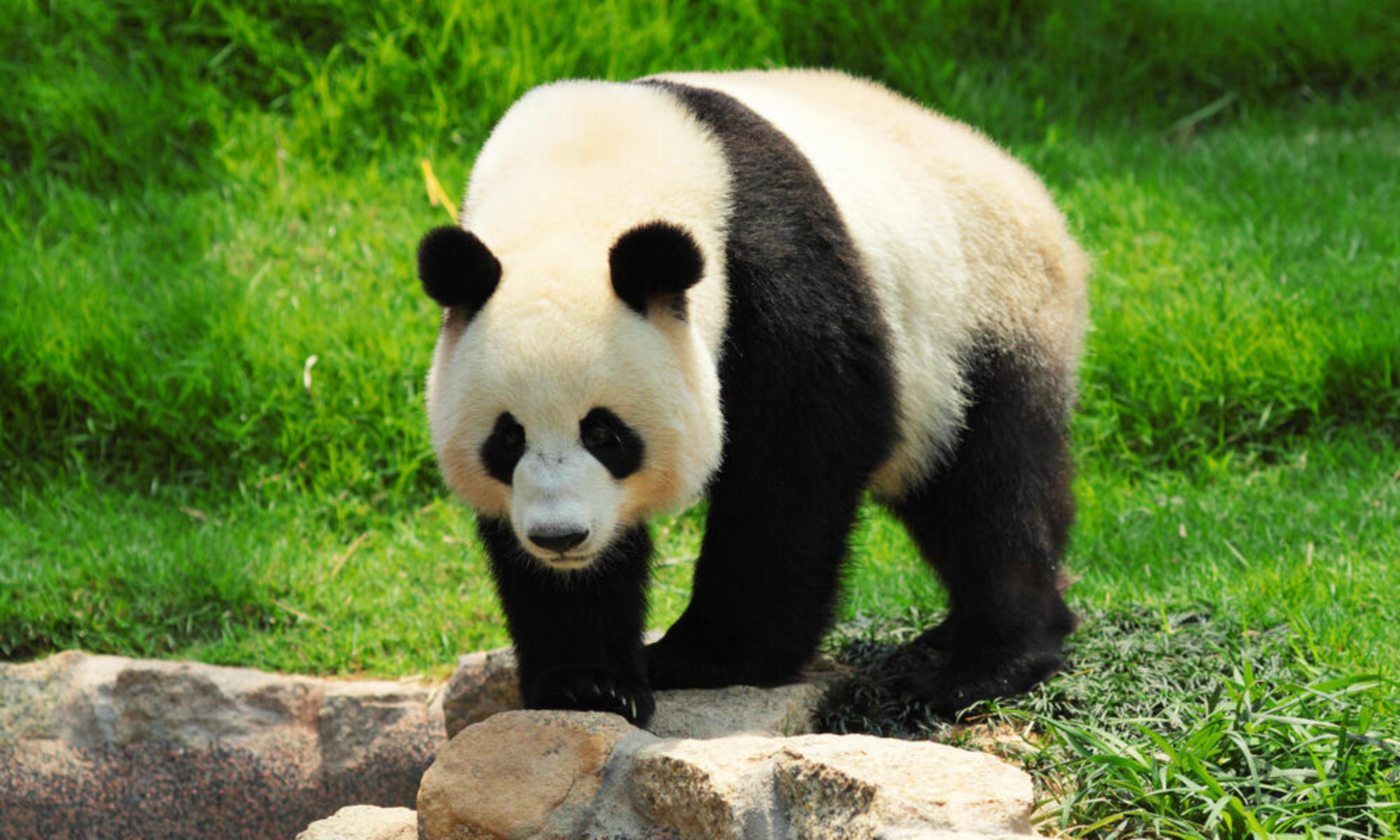
The Giant Panda was once widespread in southern and eastern China, Vietnam and Myanmar (Burma). Today the Giant Panda is limited to the mountains in a few Chinese provinces in southwestern China. Most of the Giant Pandas are in China’s Sichuan Province, but they are also found in Shaanxi and Gansu provinces. Their range is along the eastern rim of the Tibetan Plateau.
Giant Pandas do not have a permanent den and do not hibernate. In the winter they will seek shelter in hollow trees. Giant Pandas typically have a range of 4-7 km but can travel up to 10 km a day looking for food, water, and shelter.
The Giant Panda has lived for centuries in coniferous forests with dense undergrowth of bamboo at elevations of 5,000 to 11,000 feet. Rain or dense mist throughout the year shrouds these remote forests in heavy clouds. In the winter snow is common.
Today, these forests are under attack by dramatic increases in human population. Agriculture, ranching, logging, trapping, and human settlement dramatically threaten their habitat. Previously, they lived at lower elevations but farming and clearing of the forest have pushed them higher into the mountains.
The Giant Panda’s primary food source, bamboo, is decreasing. Bamboo grows under the shade cover of the large fir trees. Logging and clearing the land for agricultural uses is a major factor in the reduction of bamboo.
The impact of rapid population growth has seen the destruction of significant Giant Panda habitat. In an effort to defend the Giant Panda, the Chinese government enforces a logging ban in the Giant Panda reserves.
The 8.0 earthquake of 2008 was in Sichuan Province, home to the Giant Pandas. The quake buried much of the Giant Pandas’ bamboo under tons and tons of rock and mud.
In the 1940s, the Chinese government began conservation efforts to protect pandas. In 1963 the first panda reserve was established in southern China. Pandas were classified as an endangered species in the 1980s.
Today there are 40 Giant Panda reserves in China. These reserves need to be connected via corridors in order to reduce isolation and fragmentation of the Giant Panda population. Villages and human activities now block open ranges for migration. The fragmentation of Giant Panda areas is a major problem affecting mating.
Another problem related to the fragmentation of the Giant Panda areas is that the bamboo will flower and then die off about every 20 years. When this occurs the Giant Pandas need to migrate to a new area. There have been reports of Giant Pandas starving when they are unable to find bamboo in new areas.
The destruction of the Giant Pandas’ natural habitat, the reduction in available bamboo forests and expanding human populations are the main threats to the Giant Panda.

