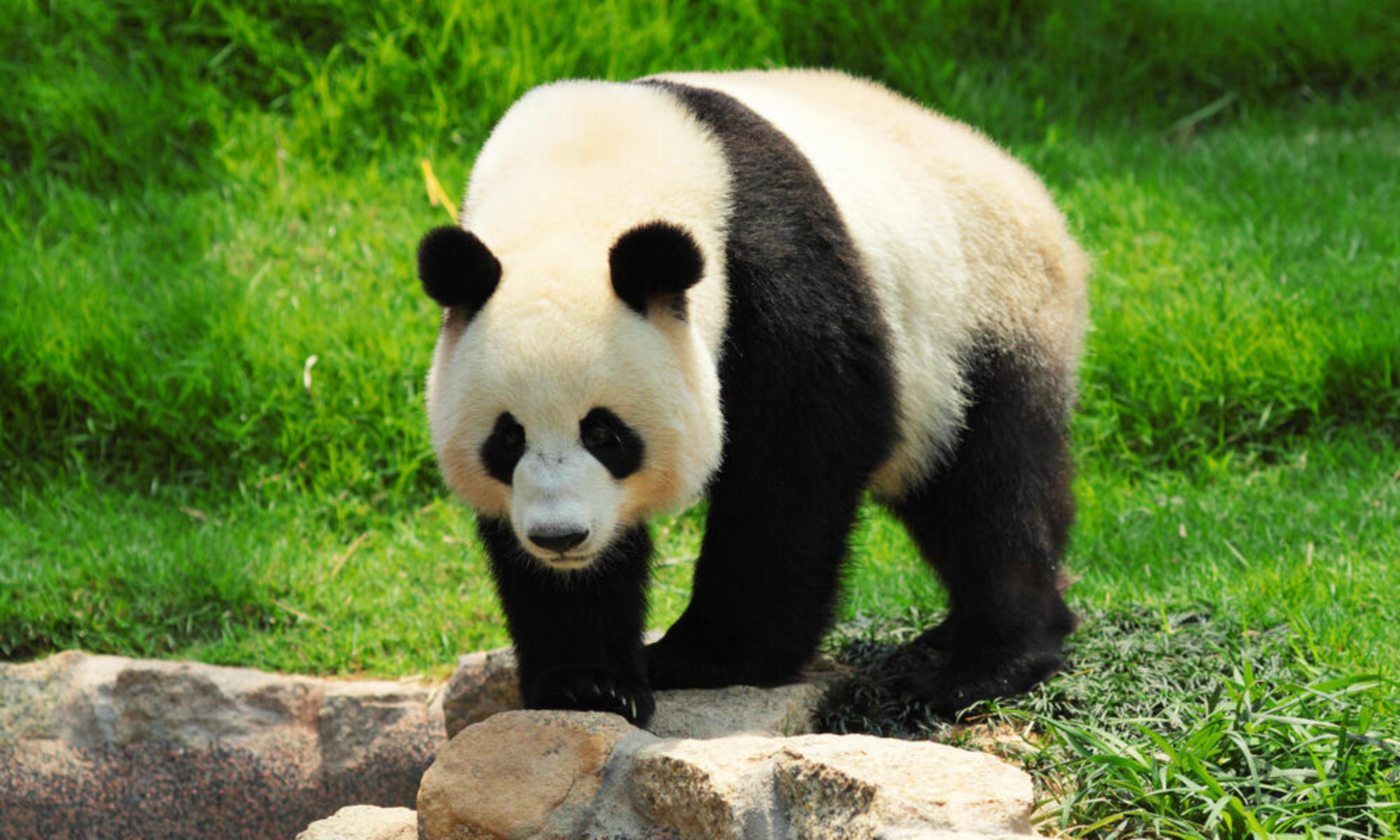
Giant Pandas are classified as carnivores; however their diet is closer to that of herbivores. A Carnivore is an animal that eats mostly meat. An herbivore is an animal that eats mostly plants.
The Giant Pandas’ diet consists almost entirely of bamboo stalks, shoots and roots. They eat from 25 to 40 pounds per day. There are about 25 different types of bamboo.
When available, Giant Pandas will eat fish, flowers and small animals. In captivity they also receive milk, eggs, ground meat and specially formulated vitamin bread. Apples and carrots are a favorite treat.
Since the Giant Pandas’ digestive system is not very efficient, they must consume large quantities of bamboo every day in order to obtain the nutrition they need. Cubs are especially prone to digestive problems.
Pandas eat for up to 14 hours a day. Their unique paws make it possible for them to hold the bamboo and bite the stalks. They generally eat in a sitting position but also like to snack lying on their backs.
The puffy cheeks that make the Giant Pandas appear so adorable are actually powerful muscles that enable the Giant Pandas to chew through even the toughest bamboo stalks.
Unlike other bears, the Giant Pandas do not store fat and therefore do not hibernate. Consequently, they are constantly in search of food.
One problem for wild Giant Pandas is that the bamboo species flowers and dies. It then takes several years for the bamboo to recover. In the past, Giant Pandas would migrate to other areas in search for new plants. Now, with their range fragmented, this is often difficult.
Giant Pandas drink water from the rivers and streams in their mountain environment.
